

Hiring an international SEO agency is rarely a choice between logos. It is a choice between five ways of buying the work, and picking the wrong one can burn a year of budget before anyone notices. This piece compares those five models, prices them per market, and hands you the questions that expose a weak vendor on the first call. For the full picture, read PLLC for Licensed Professionals.
International SEO agency models at a glance
Five ways to buy the work, with the US price ranges each one typically carries in 2026.
| International SEO Agency Model | Typical Monthly Spend (USD) | Best For | Ramp to First Results | Main Risk |
| Global full-service agency | $8,000 to $25,000 | Six or more markets under one buyer | 4 to 6 months | Your account lands with a junior pod |
| Boutique global search specialist | $4,000 to $12,000 | Three to eight markets, messy site structure | 3 to 5 months | Thin cover for rare languages |
| One local agency per country | $1,500 to $5,000 per country | One to three priority countries | 3 to 4 months | Nobody owns the global structure |
| Freelance consultant plus your team | $2,000 to $6,000 | Companies with strong in-house writers | 4 to 7 months | One person, one point of failure |
| Hybrid: specialist strategy, local writers | $5,000 to $15,000 | Four or more languages, content-led growth | 3 to 6 months | Needs a real owner on your side |
Key takeaways
- Five buying models exist, and the gap between the cheapest and the priciest runs about ten times.
- Budget per market, never per campaign. A blended retainer hides which countries are being starved.
- Your domain structure, ccTLD or subfolder or subdomain, sets the cost floor before anyone writes a word.
- China, Russia, South Korea, and Czechia run on engines other than Google.
- Plan on three to five months for the first market, then faster for every market after it.
What the Work Involves for an International SEO Agency in Each Market
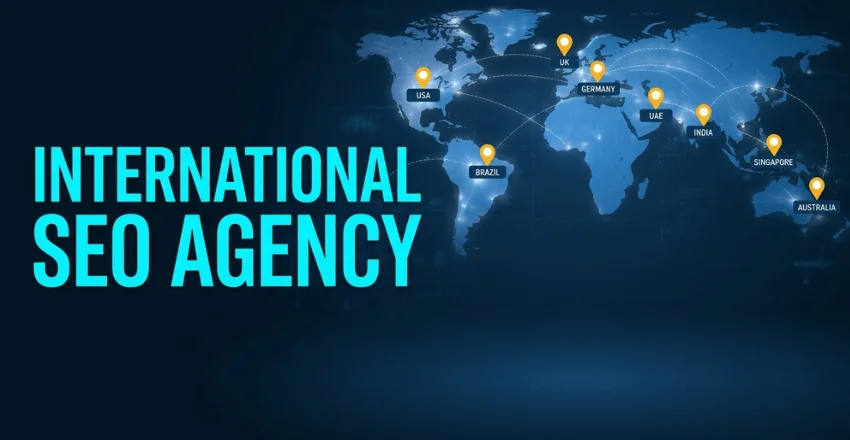
The job of an International SEO Agency is to make one website earn traffic in several countries at once. The work splits three ways. First, technical targeting ensures each country gets its own page. Then native keyword research is conducted in every language you serve, followed by content written for local searchers instead of translated for them.
Translation is the part buyers underrate. German and Austrian shoppers reach for different words for the same product, and a translated keyword list flattens both. That gap costs you the smaller market.
Ask how a vendor builds a competitor set for each country. Ask early. The job resembles this teardown of Chipotle’s competitors, repeated in five languages, because the brands you fight for attention in Spain are rarely the brands you fight at home.
The five models, and who each one suits
Global full-service agency
One agreement, one report, every market covered. You pay for coordination, and you get it. The trade is seniority. People who won the pitch rarely run the account by month three, and nobody tells you when the handover happens.
Boutique global search specialist
These shops do nothing but multi-country search. They tend to be sharper on hreflang and site structure than a generalist, and they cost less. Rare languages are where they thin out. Push hard there. Ask which markets they have shipped in the last twelve months.
One local agency per country
Hiring in-market buys you genuine local knowledge. It also buys you three separate opinions about your site structure. Someone has to referee. Otherwise the German team will quietly ask for a subdomain that the Spanish team hates, and you pay for both.
Freelance consultant plus your team
This is the cheapest credible option if you already employ writers. Good consultants set the structure, train your people, and review the output: one person, one calendar. Time off and turnover are the risks you carry.
Hybrid: specialist strategy, local writers
A specialist owns the technical layer and the plan. Native writers, hired directly or through a partner, produce the words. It scales well. Most content-led brands settle here by their third market.
Our verdict
For a company entering three to six markets, the hybrid model wins. That is our pick. It puts one owner on the structure and native speakers on the words, which is where the ranking actually comes from. Choose global full-service only if you have six or more markets and nobody internal to run them. Choose local-per-country only if one country carries most of your revenue, and you can refer the rest.
What it costs per market and per language
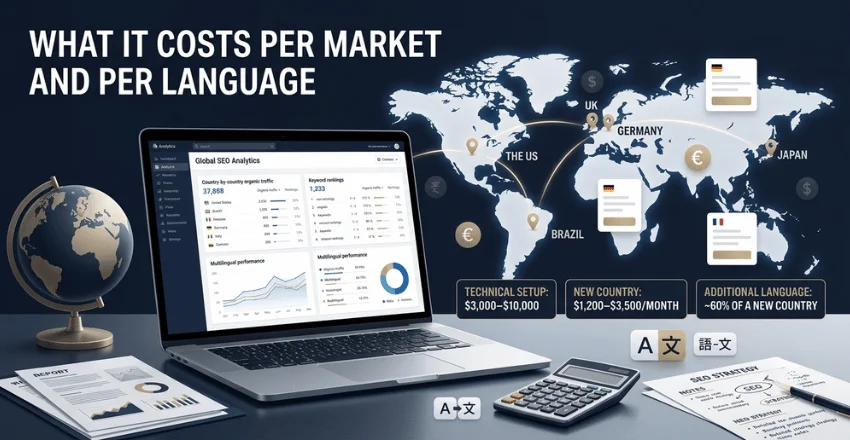
Most guides quote a single blended retainer. That number tells you nothing useful. Germany and Brazil do not cost the same, and adding a second language inside a country you already serve costs less than adding a whole new country.
A workable way to budget:
- Technical setup, paid once: $3,000 to $10,000 for hreflang, structure, and templates across the whole site.
- Each new country: $1,200 to $3,500 a month for research plus content and local links.
- Each extra language inside a country you already serve: roughly 60% of a new country.
- Markets that run on other engines: add 30% to 50%, because the tooling and the rules differ.
Think in units. Budget behaves like any other input you can run short of, and the fix is the same one that manufacturers use. Firms that grow by using fewer scarce resources measure output per unit. Country-level reporting is that discipline applied to search.
The domain structure decision
Sit in that meeting. Someone decides this before anyone writes a word, and it sets your cost floor for years.
| ccTLD | Strongest country signal, best local trust | Highest, since each domain earns authority alone |
| Subfolder | Inherits the main domain’s authority | Lowest, one site to maintain |
| Subdomain | Clean separation for separate teams | Middling, and the weakest ranking case |
Most agencies push you toward subfolders, and for most companies that advice is right. A ccTLD earns its keep where local trust drives the sale, or where a market expects a local domain. Whichever you pick, every version needs matching hreflang tags that point back at each other.
Where Google is not the search engine
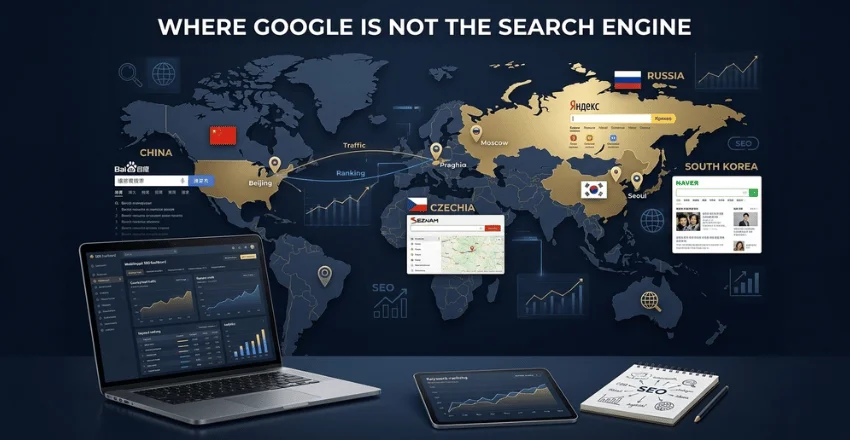
Google is not universal. Four markets break that assumption, and a serious vendor raises them before you do.
- China: Baidu takes roughly two-thirds of search, and hosting inside the country changes what ranks.
- Russia: Yandex holds around three-quarters, with its own webmaster tools and its own rules.
- South Korea: Naver sits near 60% and blends blog posts, cafe threads and shopping results into one page.
- Czechia: Seznam still takes a meaningful minority, and local publishers link differently there.
If a pitch treats those four as also supported, ask which named person has shipped there.
Seven questions that expose a weak agency
Run these on the first call. The answers separate a team that has done this from a team that has read about it.
- Which markets have you shipped in the last twelve months, and may I speak to one of those clients?
- Do you run native keyword research per market, or translate our existing list?
- Who writes the content, and do they live in the country?
- How will you report traffic and revenue by country rather than in one global total?
- Do you already work with a competitor of ours in a target market? An undisclosed conflict of interest is worth catching before you sign.
- What is your hreflang plan for our current structure, and who implements it?
- What happens in month one, and in month six?
Timeline: what to expect month by month
| Month 1 | Audit, structure decision, hreflang plan, first market research | You hold a written structure recommendation |
| Months 2 to 3 | Templates ship, first local pages go live, indexing begins | Country-level impressions in Search Console |
| Months 3 to 5 | First market starts ranking for mid-tail terms | Rankings tracked from inside that country |
| Months 6 to 9 | Second and third markets follow faster | Revenue split by country, never blended |
| Months 9 to 12 | Local link building compounds | Whether spend still matches market value |
New domains and non-Google markets sit at the slow end of every row.
Your next step
Pick your two highest-value markets and price them separately before you talk to anyone. Then run the seven questions above on three vendors, and ask each one for a country-level report from a live client. One vendor will show you real numbers by country. Shortlist that one.
Frequently asked questions
Roughly $1,500 to $25,000 a month in the US, depending on the model and the market count. Mid-market brands running three to six countries usually land between $5,000 and $12,000.
One vendor wins on consistency and on-site structure. Local shops win on market knowledge. The hybrid model takes the first from one and the second from the other, which is why it has become the common answer.
Plan on three to five months for the first market. Later markets move faster, since you already paid for the technical work and the templates. Brand-new domains take six to twelve months.
Translate the pages that describe your product. Write fresh for anything driven by search demand, because the questions people ask change at the border.
Yes, if you run separate pages for the US, the UK, and Australia. Without matching hreflang tags, Google picks one of them, and the other two compete against it.