

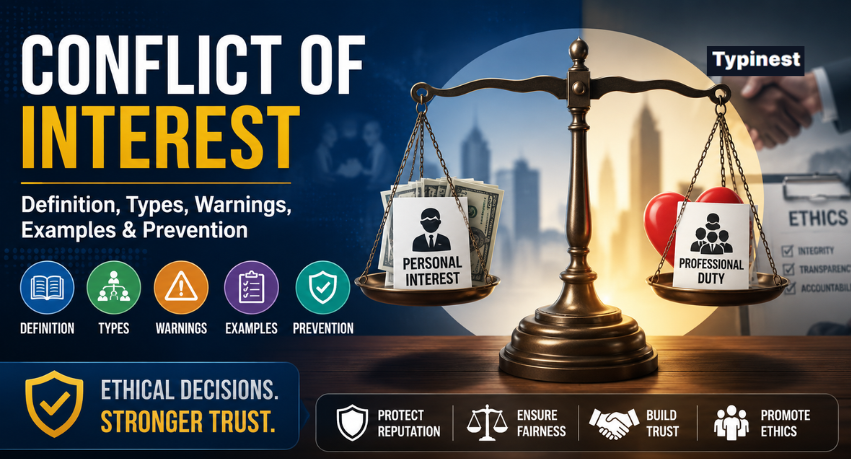
A conflict of interest is one of the most common ethical challenges faced by businesses, government agencies, healthcare organizations, educational institutions, and professionals across various industries. While the term is often associated with corruption or misconduct, not every conflict of interest involves illegal behavior. In many cases, it simply refers to situations in which personal interests could influence professional decisions. For a closer look at this, see Strands Game NYT In.
Understanding conflict is essential because trust is the foundation of every successful organization. When stakeholders, employees, customers, or the public believe decisions are being influenced by personal gain rather than fairness and objectivity, confidence can quickly disappear.
This can lead to damaged reputations, legal consequences, financial losses, and weakened relationships. In this guide, you’ll learn what a conflict is, the different types, warning signs to watch for, real-world examples, and practical strategies to prevent conflicts before they become serious problems.
Conflict of Interest: Types, Risks & Solutions
| Concept | Explanation |
|---|---|
| What is Conflict of Interest | A situation where personal interests may influence professional decisions |
| Why it matters | It can damage trust, fairness, and decision-making |
| Actual Conflict | When a real conflict directly affects decisions |
| Potential Conflict | When a conflict may arise in the future |
| Perceived Conflict | When others believe a conflict exists |
| Financial Conflict | When money or financial gain influences decisions |
| Personal Conflict | When relationships affect professional judgment |
| Professional Conflict | When multiple job duties create divided loyalty |
| Business Example | Manager hires a relative’s company as supplier |
| Government Example | Official benefits from policies affecting investments |
| Healthcare Example | Doctor influenced by pharma incentives |
| Education Example | Professor biased due to research funding |
| Nonprofit Example | Board member favors relatives’ businesses |
| Warning: Lack of Transparency | Failure to disclose personal or financial interests |
| Warning: Favoritism | Repeated preference for specific people or vendors |
| Warning: Unusual Gifts | Accepting expensive gifts or benefits |
| Warning: Resistance | Avoiding oversight or independent review |
| Warning: Personal Gain | Benefiting from professional decisions |
| Warning: Secret Decisions | Decisions made without proper approval |
| Risk Impact | Leads to legal, financial, and reputational damage |
| Ethical Concern | Can reduce fairness and integrity in decisions |
| Disclosure Importance | Helps identify and manage conflicts early |
| Prevention Method | Clear policies and guidelines in organizations |
| Prevention Method | Regular disclosure of interests |
| Prevention Method | Ethics training and awareness programs |
| Prevention Method | Independent audits and oversight |
What Is a Conflict of Interest?

A conflict of interest occurs when an individual’s personal interests, financial benefits, relationships, or outside activities interfere, or appear to interfere, with their professional responsibilities and decision-making. The key issue is not always whether wrongdoing has occurred. Rather, the concern is whether personal interests could compromise impartial judgment.
For example, if a manager hires a close family member without considering other qualified candidates, their personal relationship may influence a professional decision. Even if the family member is qualified, others may perceive the process as unfair. Simply put, a conflict arises when someone faces competing loyalties that could affect their ability to act objectively.
Why Do Conflicts of Interest Matter?
A conflict of interest can have serious and far-reaching consequences for both individuals and organizations. When such conflicts are not properly disclosed or managed, they can result in loss of public trust, damage to professional credibility, poor decision-making, legal and regulatory penalties, financial losses, reduced employee morale, and long-term reputational harm.
In today’s highly transparent business environment, organizations are expected to act ethically and openly. Even the appearance of favoritism or bias can create concern among employees, customers, investors, and regulators. This is why many organizations enforce strict conflict-of-interest policies and clear disclosure requirements to maintain trust and accountability.
Types of Conflict of Interest

Not all conflicts of interest are the same. Understanding the different categories helps organizations identify risks more effectively.
Actual Conflict
An actual conflict exists when personal interests directly interfere with professional responsibilities. Example: A procurement manager awards a contract to a company owned by a family member.
Potential Conflict of Interest
A potential conflict occurs when a situation has the potential to develop into a conflict at a later stage. Example: An employee involved in vendor selection is negotiating future employment with one of the vendors.
Perceived Conflict
A perceived conflict occurs when others reasonably believe a conflict exists, even if no improper behavior has occurred. Example: A board member participates in discussions involving a close friend’s business.
Financial Conflict
A financial conflict occurs when a person may receive money or other financial benefits as a result of a particular decision.
Examples include:
- Stock ownership
- Investment interests
- Consulting fees
- Performance bonuses tied to specific outcomes
Personal Relationship Conflict
Personal relationships can sometimes affect professional judgment.
Examples include:
- Hiring relatives
- Favoring friends
- Granting promotions based on personal connections
Professional Conflict
This situation arises when a person has multiple professional duties that pull their attention in different directions, leading to a split in loyalty. For example, a consultant working for two competing companies may face challenges maintaining confidentiality and objectivity.
Common Examples of Conflict of Interest

Conflict of interest situations can occur in almost any professional field. In business, a manager may recommend a supplier owned by a family member without revealing the relationship, and in government, a public official may participate in decisions that benefit a company in which they have a financial interest.
In healthcare, a doctor may receive incentives from a pharmaceutical company and favor its products over others; in education, a professor may evaluate research funded by an organization that pays them personally and by nonprofit organizations; board members may approve contracts involving friends or relatives.
Warning Signs of Conflict

Potential conflicts of interest often reveal themselves through a few common warning signs. These include a lack of transparency about personal relationships or financial interests, favoritism toward specific vendors or employees, acceptance of expensive gifts or benefits, resistance to oversight or review, personal gain from professional decisions, and secretive decision-making processes.
The Impact of Conflict of Interest on Organizations

Conflict of interest can affect organizations in multiple ways.
Financial Consequences
Poor decisions influenced by personal interests can result in:
- Higher operating costs
- Lost business opportunities
- Regulatory fines
- Legal expenses
Reputational Damage
Public trust can be difficult to rebuild once stakeholders perceive unethical behavior. Negative publicity often attracts media attention and can affect customer loyalty for years.
Reduced Employee Trust
Employees who observe favoritism or unfair treatment may become disengaged and less productive.
Governance Failures
Conflicts of interest can weaken oversight, accountability, and decision-making processes.
How to Prevent Conflict of Interest?

Ultimately, organizations that fail to address conflicts risk both short-term disruptions and long-term damage. Preventing conflict starts with strong organizational systems and proactive management. The first step is to establish clear policies that define what constitutes a conflict, how it should be reported, how it will be reviewed, and the consequences for non-compliance.
These policies create consistency and help employees understand their responsibilities. Organizations should also require regular disclosure from employees, executives, and board members. This includes financial interests, outside employment, business relationships, and any family connections that may influence work decisions.
Regular disclosure helps identify potential risks before they become serious problems. Providing ethics training is another important step. Employees should be trained in ethical responsibilities, identifying conflicts of interest, reporting procedures, and real-life scenarios. This improves awareness and helps people make better decisions in daily work situations.
Best Practices for Managing a Conflict of Interest

When a conflict is identified, organizations should follow a structured process:
- Identify the conflict.
- Disclose relevant information.
- Assess the level of risk.
- Determine appropriate safeguards.
- Document actions taken.
- Monitor the situation regularly.
In some cases, recusals from decision-making may be necessary. In others, an independent review may be sufficient. The goal is not always to eliminate every conflict but to manage them fairly and transparently.
Building an Ethical Organizational Culture

Strong ethical cultures reduce the likelihood of conflicts of interest becoming serious problems. Organizations can strengthen ethics by:
- Demonstrating leadership accountability
- Rewarding ethical behavior
- Encouraging transparency
- Providing clear reporting channels
- Investigating concerns promptly
When leaders set the right example, employees are more likely to follow ethical standards.
Conclusion
Conflict of interest is an important issue that affects organizations, professionals, and public institutions across every industry. Whether actual, potential, or perceived, conflicts can undermine trust, compromise decision-making, and create legal and reputational risks if left unmanaged.
By understanding the different types of conflicts, recognizing warning signs, and implementing effective prevention strategies, organizations can protect their reputation, strengthen stakeholder confidence, and foster a culture of integrity.
In today’s business environment, ethical decision-making is more than a compliance requirement; it is a critical factor in achieving long-term success and maintaining public trust. Fortunately, most conflicts of interest can be prevented through transparency, disclosure, clear policies, ethics training, and strong organizational oversight.
Want to know about From Waste Reduction to Profit Growth: How Would a Manufacturer Benefit from Using Fewer Scarce Resources? Check out our Education category.
Frequently Asked Questions (FAQs)
A conflict occurs when personal interests or relationships interfere with professional responsibilities or objective decision-making.
No. Many conflicts are not illegal, but failing to disclose or properly manage them can lead to legal or ethical problems.
An actual conflict directly affects decision-making, while a perceived conflict merely appears problematic to others.
Disclosure promotes transparency, enables risk assessment, and helps organizations implement safeguards.
Yes. Hiring, promoting, or awarding contracts to relatives can create conflicts if objectivity is compromised.