


Search results for tea for bloating and weight loss are mostly advertising. The two halves of that question do not share an answer. Several herbal teas ease gas and cramping, with trial data behind them. The fat loss claims are thin.
Here is the honest summary on tea for bloating and weight loss. Peppermint, ginger, fennel and chamomile can calm gas, cramping and stomach fullness within an hour or two. Green tea nudges metabolism a little. Slimming and detox blends mostly flush water and stimulate the bowel, so the scale moves without any fat leaving your body.
Key takeaways
- Real but modest evidence backs peppermint, ginger, fennel and chamomile against gas and cramping.
- No tea burns fat. Green tea’s effect on metabolism is small and fades as your body adapts to caffeine.
- Detox and slimming blends often contain senna, a stimulant laxative sold for constipation.
- A quick drop of two or three lbs after a slimming tea is fluid and stool. It comes back.
- Bloating alongside unplanned weight loss, blood or fever needs a doctor, not a stronger brew.
Which teas have evidence, and how strong it is
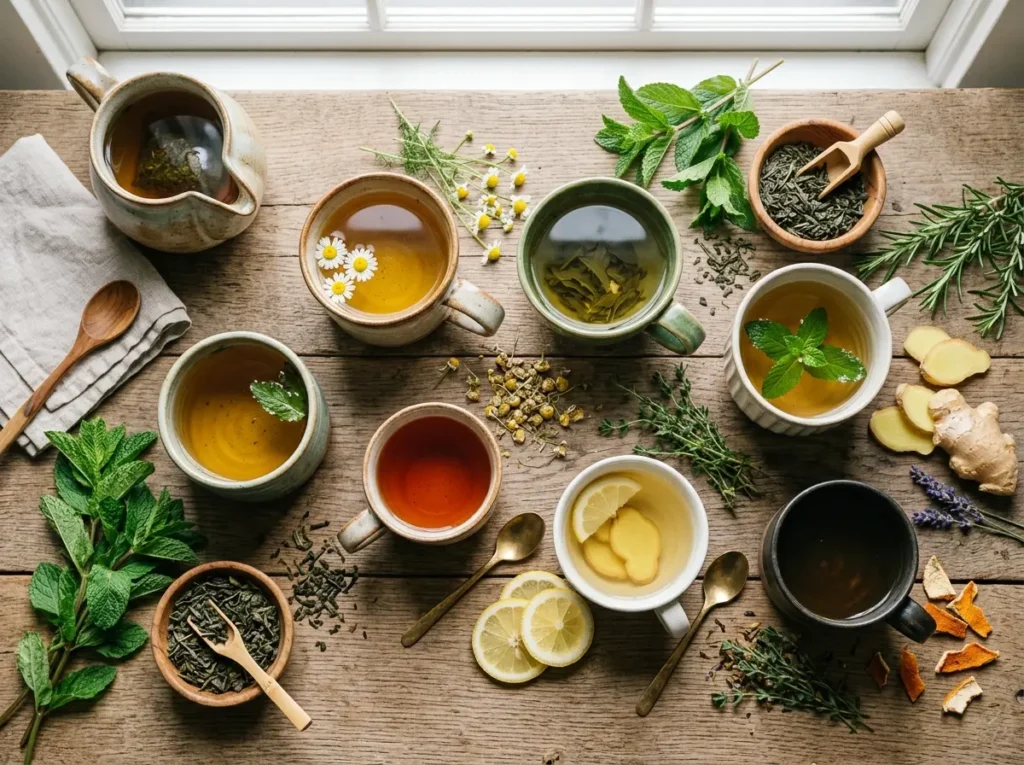
Evidence quality varies a lot between herbs sitting on the same supermarket shelf. Controlled trials back peppermint. Fennel has centuries of folk use and a handful of small studies. This table sorts the popular options by what the research supports, not by what the packaging says.
| Tea | What research supports | Caffeine per 8 fl oz | Main caution |
|---|---|---|---|
| Peppermint | Less cramping and abdominal pain; strongest data of the group | 0 mg | Can worsen acid reflux |
| Ginger | Faster stomach emptying, less heaviness and nausea | 0 mg | May add to blood thinners |
| Fennel | Small trials on colic and trapped gas; limited adult data | 0 mg | Thin safety data in pregnancy |
| Chamomile | Mild calming effect; may help stress-driven gut symptoms | 0 mg | Ragweed allergy cross-reaction |
| Green tea | A small, short-lived rise in energy use | About 28 mg | Caffeine can irritate an empty stomach |
| Senna slimming blends | Bowel movements, and nothing beyond that | 0 mg | Cramping, dependence, potassium loss |
Tea for bloating and weight loss: where the claims fall apart
Bloating and body fat are separate problems, and the sales pitch depends on you blurring them. A flatter stomach after a hot drink usually means less gas and less retained fluid. Nothing has left your fat cells.
Green tea does lift energy use slightly. That effect is small; it shrinks in people who already drink caffeine daily, and one snack erases it. In guidance updated in July 2026, the National Center for Complementary and Integrative Health says the science does not support green tea supplements for weight loss.
Fat comes off slowly, and from everywhere at once. That is why honest guides on how to get rid of back fat start with a calorie deficit rather than a drink.
Peppermint carries the strongest research for gut symptoms

Peppermint relaxes the smooth muscle in your gut wall. So it eases cramping and spasm rather than the volume of gas itself. Trial results here are solid enough to quote properly.
A 2019 meta-analysis in BMC Complementary and Alternative Medicine pooled 12 randomized trials covering 835 patients. Peppermint oil beat placebo for IBS symptoms as a whole, with a risk ratio of 2.39 and a number needed to treat of three.
One catch matters here. Those trials used enteric-coated peppermint oil capsules, at doses well above what steeps out of a tea bag. Tea is a gentler version of the same idea, so expect gentler results.
Ginger, fennel and chamomile do smaller jobs well
These three work through different routes, which is why people swear by different ones. Match the herb to the feeling you actually have.
- Ginger speeds up stomach emptying, so it suits the heavy, sat-too-long fullness after a big meal.
- Fennel has a mild antispasmodic effect and a long record against trapped gas.
- Chamomile calms you rather than your digestion, which helps if stress winds your gut up.
A 2018 systematic review of clinical trials in Food Science & Nutrition reported that ginger speeds gastric emptying. In one crossover study it cites, the stomach area after a meal came out 24% smaller with a ginger and artichoke extract than with placebo.
Senna, the ingredient hiding in slimming teas
Turn the box over before you buy. If the list includes senna, cascara or a vague herbal cleanse blend, you are buying a laxative rather than a fat burner. Price makes the trade look worse: detox programs commonly sell for $25 to $40 per two-week supply, while a box of 20 peppermint tea bags runs $3 to $6.
According to the NIH LiverTox database, a typical senna dose runs 15 to 30 mg of sennosides twice a day. The same entry recommends short-term use only, under one week. Long-term misuse brings electrolyte imbalance, cramping, and a colon that grows reluctant to work on its own.
Daily use is where the trouble starts. Your bowel adapts, you need more for the same result, and stopping brings rebound constipation and, awkwardly, more bloating than you began with.
What actually moves fat
Fat loss is a boring arithmetic problem. You eat less than you burn, for long enough that it shows on the scale. Tea can support that habit, mainly by replacing sweetened drinks, and that is the honest limit of its job.
Training does the rest. A structured plan beats random cardio because it protects muscle while the deficit runs, and a HYROX workout program gives you a schedule instead of guesswork.
Start where your body is, not where the plan is. If lunges pinch at the front of your hip, a few weeks of hip flexor strengthening exercises will make the harder sessions possible.
Walking helps the other half too. Movement pushes gas along, so a ten-minute walk after dinner often beats a mug of anything.
How much to drink, and when
Timing matters more than volume here. Two or three cups a day is plenty, and the useful window sits right after eating.
- Steep herbal tea for 5 to 10 minutes with the cup covered, so the oils stay in the drink.
- Pour 8 to 12 fl oz after the meal that usually leaves you heavy.
- Keep green tea before 2 p.m. if caffeine touches your sleep.
- Give it 30 to 60 minutes before deciding whether it helped.
Who should skip these teas?
Herbal does not mean harmless, and several groups have a real reason for caution.
- Anyone with acid reflux may do worse on peppermint, which relaxes the valve at the top of the stomach.
- Ginger in large amounts may add to the effect of blood thinners such as warfarin.
- Chamomile can set off symptoms in people allergic to ragweed and related plants.
- Pregnancy, breastfeeding, kidney disease and any regular medication all deserve a word with your doctor first.
When bloating means see a doctor
Most bloating traces back to food, swallowed air or plain timing. Some of it is a sign of something more serious.
Book an appointment if bloating lasts most days for three weeks or more. Do the same if it arrives with unplanned weight loss, blood in your stool, vomiting, fever, or a bowel habit change that sticks. Persistent bloating sits on the symptom list for ovarian cancer, and that warning sign deserves a proper look rather than a stronger tea.
The bottom line
Buy the tea for the reason it earns. Peppermint, ginger and fennel are cheap, pleasant and mildly useful against gas. Skip anything promising a number on the scale, especially with senna on the label.
Frequently asked questions
Peppermint for cramping, ginger for heavy fullness, fennel for trapped gas. No single winner exists, because bloating has several different causes.
No. Nothing you steep pulls fat from one chosen area. Spot reduction is not how bodies work.
Gas and cramping often settle within 30 to 60 minutes. The overnight change from a laxative blend is fluid and stool, and it returns within days.
If senna is in it, no. Daily stimulant laxative use invites dependence and low potassium, and neither trade is worth a temporarily flat stomach.
Slightly, and briefly. The rise is measurable in a lab and close to meaningless across a normal week of eating.
No. Capsules in those trials carry far more oil, and they release it further down the gut.