

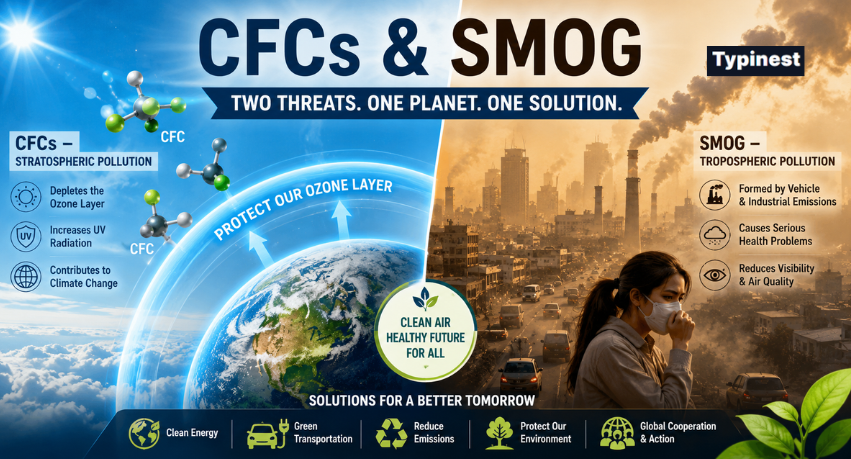
Have you ever looked up at a city skyline and noticed a thick brownish haze hanging over the buildings? Or heard scientists discuss ozone layer depletion and wonder how it affects everyday life? These environmental concerns may seem different, but they are closely connected through one major issue: air pollution. Understanding which types of pollution include CFCs and smog is essential because these pollutants have far-reaching effects on human health, ecosystems, and the Earth’s atmosphere.
Chlorofluorocarbons (CFCs) are man-made chemicals once widely used in refrigeration systems, aerosol sprays, and industrial applications, while smog is a harmful mixture of pollutants that forms in the atmosphere through chemical reactions involving vehicle emissions and industrial gases.
Although they differ in composition and behavior, both are significant contributors to air pollution and pose serious environmental risks. The impact of these pollutants goes beyond hazy skies and unpleasant air quality. CFCs have been linked to ozone depletion in the stratosphere, reducing Earth’s natural protection against harmful ultraviolet radiation. Smog, on the other hand, can trigger respiratory diseases, worsen asthma symptoms, reduce visibility, and negatively affect crops and wildlife.
CFCs and Smog Air Pollution Facts and Solutions
| Topic | Description |
|---|---|
| Pollution Type | Both CFCs and smog are forms of air pollution. |
| CFC Meaning | CFC stands for Chlorofluorocarbons. |
| Smog Meaning | Smog is a mixture of air pollutants and moisture. |
| Main Source of CFCs | Refrigerators, air conditioners, and aerosol products. |
| Main Source of Smog | Vehicle emissions and industrial pollution. |
| Atmospheric Level | CFCs affect the upper atmosphere; smog affects ground-level air. |
| Ozone Layer Impact | CFCs contribute to ozone depletion. |
| Health Impact | Smog can cause respiratory and cardiovascular problems. |
| Visibility Effect | Smog reduces visibility in cities. |
| Human-Made Pollutants | Both CFCs and smog are primarily human-generated. |
| Environmental Risk | They damage ecosystems and environmental quality. |
| Climate Connection | Certain air pollutants contribute to climate change. |
| Common Urban Issue | Smog is more common in densely populated cities. |
| UV Radiation Risk | Ozone depletion increases exposure to harmful UV rays. |
| Short-Term Health Effects | Eye irritation, coughing, and breathing difficulties. |
| Long-Term Health Effects | Risks of asthma, lung disease, heart disease, and cancer. |
| Vulnerable Groups | Children, seniors, and people with respiratory conditions. |
| Air Quality Impact | Smog significantly lowers air quality levels. |
| International Action | The Montreal Protocol reduced CFC production globally. |
| Current Status | The ozone layer is gradually recovering. |
| Renewable Energy Role | Clean energy helps reduce air pollution emissions. |
| Transportation Solution | Electric vehicles can reduce smog-forming pollutants. |
| Individual Action | Conserving energy helps lower pollution levels. |
| Government Action | Emission regulations help improve air quality. |
| Future Goal | Achieving cleaner air and a healthier environment worldwide. |
What Type of Pollution Includes CFCs and Smog?
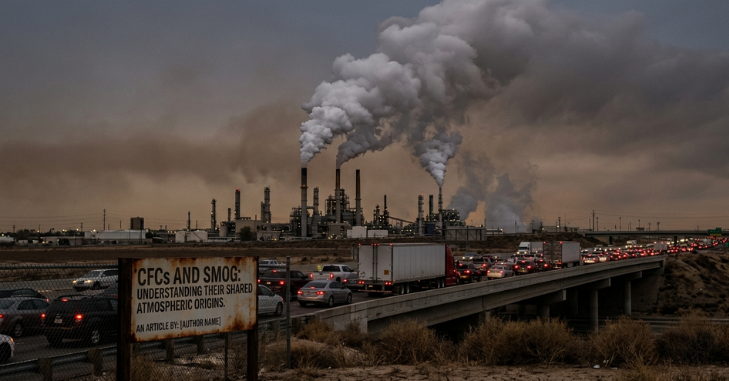
The simple answer: Air Pollution; specifically, atmospheric pollution. Both CFCs (chlorofluorocarbons) and smog are forms of air pollution, but they operate at different levels of the atmosphere and cause different types of harm.
- Smog is a ground-level air pollutant, the kind you can see and smell in cities.
- CFCs are chemical compounds that rise into the upper atmosphere and destroy the ozone layer.
Together, they represent two major categories within air pollution: tropospheric pollution (near ground level) and stratospheric pollution (high in the atmosphere).
Understanding CFCs: The Invisible Ozone Killers
What Are CFCs?
Chlorofluorocarbons (CFCs) are synthetic chemical compounds composed of chlorine, fluorine, and carbon atoms. When they were first introduced, CFCs were considered revolutionary because they were stable, non-flammable, and highly effective for a variety of industrial and household applications.
As a result, they became widely used in refrigerators and air conditioners as cooling agents, in aerosol spray products such as hairsprays and deodorants, in foam insulation materials, in packaging products, and in industrial cleaning solvents.
Instead, they gradually rise into the stratosphere, where they are exposed to intense ultraviolet (UV) radiation from the sun. This radiation causes CFC molecules to split apart, releasing chlorine atoms that react with and destroy ozone molecules.
How Do CFCs Damage the Ozone Layer?
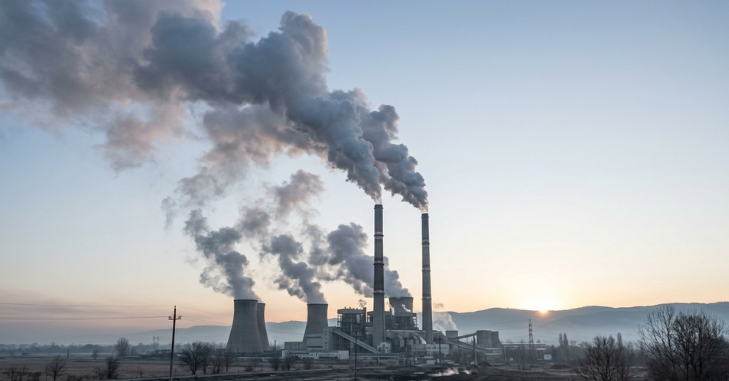
The ozone layer sits about 15–35 km above Earth’s surface. It acts as a natural sunscreen, blocking harmful UV-B and UV-C radiation from reaching us.
When CFCs reach the stratosphere:
- UV radiation breaks the CFC molecule apart
- Free chlorine atoms are released.
- Each chlorine atom reacts with and destroys an ozone (O₃) molecule.
- The chlorine atom is freed again to repeat the cycle, thousands of times.
Important: A thinning ozone layer means more UV radiation reaching Earth’s surface; increasing skin cancer rates, harming marine ecosystems, and damaging crops.
Understanding Smog: The Urban Air Crisis
What Is Smog?
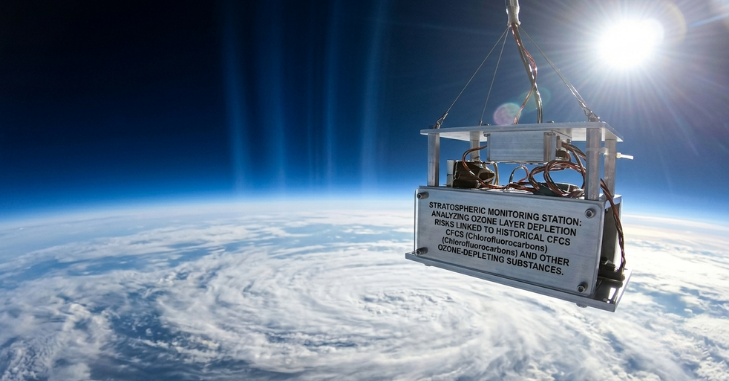
Smog is a visible form of air pollution; a thick, hazy mixture of smoke and fog. The word itself is a blend of “smoke” and “fog.” There are two main types:
| Type | Also Known As | Primary Cause | Common In |
| Sulfurous Smog | “London smog” | Burning coal and sulfur-rich fuels | Industrial cities |
| Photochemical Smog | “LA smog” | Vehicle emissions + sunlight | Sunny, traffic-heavy cities |
What Causes Smog?
Photochemical smog, the most common type today, forms through a chain reaction:
- Cars and factories release nitrogen oxides (NOx) and volatile organic compounds (VOCs)
- Sunlight triggers a chemical reaction between these pollutants.
- Ground-level ozone (O₃) and fine particulate matter (PM2.5) are produced.
- These accumulate near the surface, forming the visible brown haze we call smog.
Pro Tip: Smog is the worst on hot, sunny, windless days, especially in cities surrounded by mountains that trap air (like Los Angeles, Delhi, and Beijing).
Health Effects of CFCs and Smog
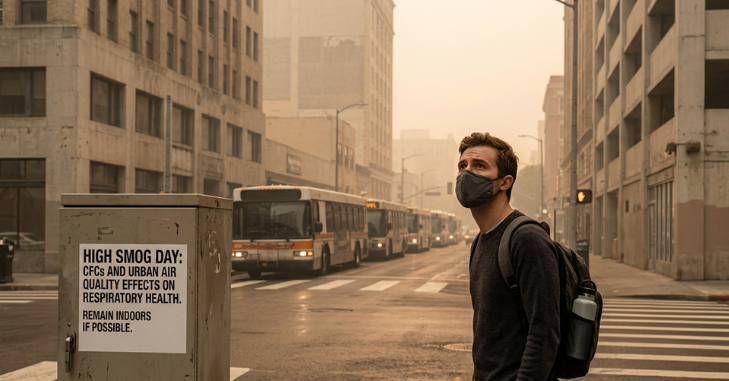
Effects of CFC-Driven Ozone Depletion
- Increased UV-B exposure → higher rates of skin cancer and cataracts
- Weakened immune systems in humans and animals
- Damage to phytoplankton, the foundation of ocean food chains
- Reduced agricultural yields from UV-stressed crops
Effects of Smog on Human Health
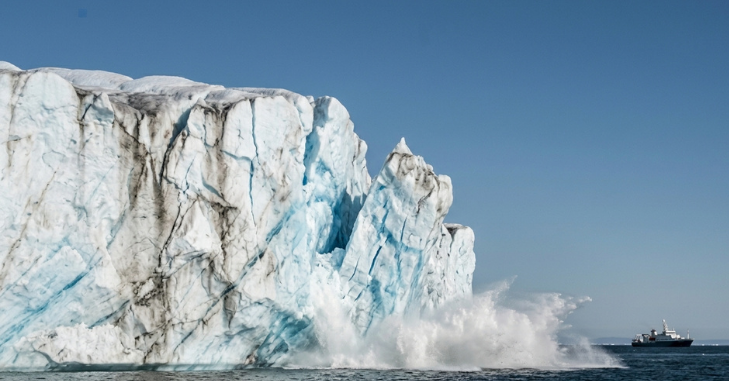
Smog is more than just an unpleasant haze in the sky; it poses serious health risks. According to the World Health Organization, air pollution contributes to approximately 7 million deaths worldwide each year. Short-term exposure to smog can cause eye, nose, and throat irritation, coughing, breathing difficulties, headaches, and dizziness.
Long-term exposure is linked to chronic respiratory conditions such as asthma, bronchitis, and COPD, as well as cardiovascular disease, lung cancer, and premature death. Children, older adults, and individuals with existing respiratory conditions are especially vulnerable to the harmful effects of smog.
Environmental Risks Beyond Human Health
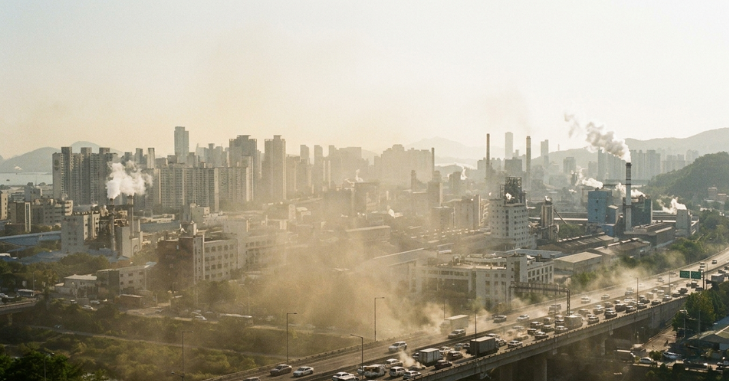
Air pollution doesn’t just harm people; entire ecosystems suffer.
Impact on Wildlife and Ecosystems
- Acid rain: formed from sulfur dioxide and nitrogen oxides, acidifies lakes and forests, killing fish and plant life
- Ocean acidification: CO₂ absorption by oceans disrupts marine biodiversity
- Biodiversity loss: smog and UV radiation stress plant species, reducing habitat quality
- Coral bleaching: increased UV radiation damages coral reefs already under temperature stress
Climate Connection
CFCs are also potent greenhouse gases, thousands of times more powerful than CO₂ per molecule at trapping heat. Even as their production is phased out, the CFCs already in the atmosphere continue contributing to global warming.
Effective Solutions: What Can We Actually Do?

Policy-Level Solutions
Best Choice: International agreements remain the gold standard. The Montreal Protocol is often cited as the most successful environmental treaty in history. Since its adoption in 1987, it has:
- Phased out over 99% of ozone-depleting substances
- Allowed the ozone layer to begin recovering
- Prevented an estimated 280 million cases of skin cancer by 2100
Similar global cooperation is needed to tackle smog and urban air pollution.
Technology and Industry Solutions
| Solution | Target Pollutant | Impact Level |
| Electric vehicles (EVs) | NOx, VOCs, PM2.5 | High |
| HFC alternatives to CFCs | Ozone-depleting substances | High |
| Industrial scrubbers | Sulfur dioxide, particulates | Medium-High |
| Renewable energy (solar/wind) | CO₂, NOx from power plants | High |
| Green urban planning | Urban heat + smog traps | Medium |
What Can Individuals Do?
You don’t have to wait for governments to act. Here are practical steps:
- Use public transportation or carpool: reducing vehicle emissions is the single biggest personal impact.
- Avoid aerosol products: choose pump-spray alternatives.
- Reduce energy consumption at home: lower electricity demand means fewer emissions from power plants.
- Plant trees and support urban greening: vegetation absorbs pollutants and cools cities.
- Support clean energy policies: vote and advocate for cleaner air standards.
- Check your local AQI: on high-pollution days, limit outdoor activity and wear masks if needed.
Pro Tip: Apps like IQAir, AirVisual, and your local weather service can give real-time Air Quality Index (AQI) readings for your area.
Key Takeaways
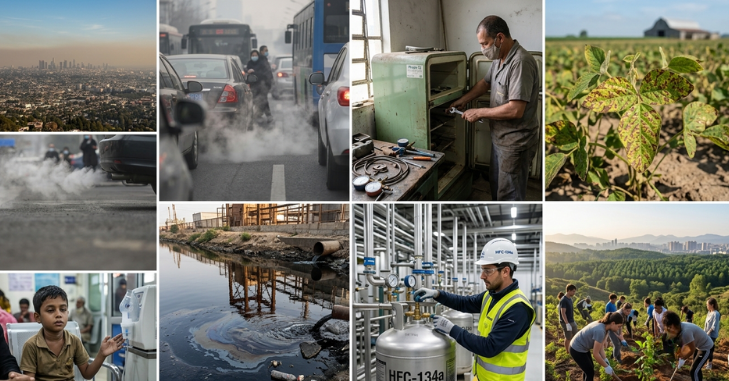
CFCs and smog are both forms of air pollution, but they affect the atmosphere in different ways. CFCs damage the ozone layer, increasing exposure to harmful UV radiation, while smog forms when vehicle and industrial emissions react with sunlight, creating serious air quality and health problems.
Although individual efforts can help reduce pollution, lasting progress depends on stronger environmental policies, cleaner technologies, and greater use of renewable energy. The success of the Montreal Protocol also shows that coordinated global action can effectively address major environmental challenges.
Conclusion
Air pollution, whether in the form of CFCs that thin our protective ozone layer or smog that clouds our cities, is one of the most pressing environmental challenges of our time. These pollutants not only damage ecosystems and contribute to climate-related concerns but also pose serious risks to human health, affecting millions of people worldwide every year.
Understanding which type of pollution includes CFCs and smog helps highlight the importance of addressing air pollution through both individual actions and large-scale environmental policies. The encouraging news is that air pollution is not an unsolvable problem.
The success of the Montreal Protocol demonstrates that when scientific research, government action, industry innovation, and international cooperation come together, significant environmental improvements are possible. Thanks to global efforts, the ozone layer is gradually recovering, proving that meaningful progress can be achieved when the world acts collectively.
Want to know about Everything You Need to Know About Conflict of Interest, Including Types, Warning Signs, Examples, and Prevention Strategies Check out our Education category.
Frequently Asked Questions (FAQ)
Both CFCs and smog are forms of air pollution. CFCs affect the upper atmosphere by depleting the ozone layer, while smog forms at ground level, harming air quality and human health.
The production of most CFCs was banned under the Montreal Protocol by the late 1990s. However, illegal CFC production has been detected in parts of Asia in recent years.
Good news: the ozone layer is gradually recovering and could return to normal by around 2066, though continued monitoring is still necessary.
Unlike natural fog, which consists of water droplets, smog contains harmful pollutants such as ozone, nitrogen oxides, and fine particles. It is largely human-made, hazardous to health, and often appears as a brownish-yellow haze.
CFCs were replaced by HCFCs and later HFCs. Although HFCs do not harm the ozone layer, they contribute to global warming, leading to efforts to adopt more environmentally friendly refrigerants.