

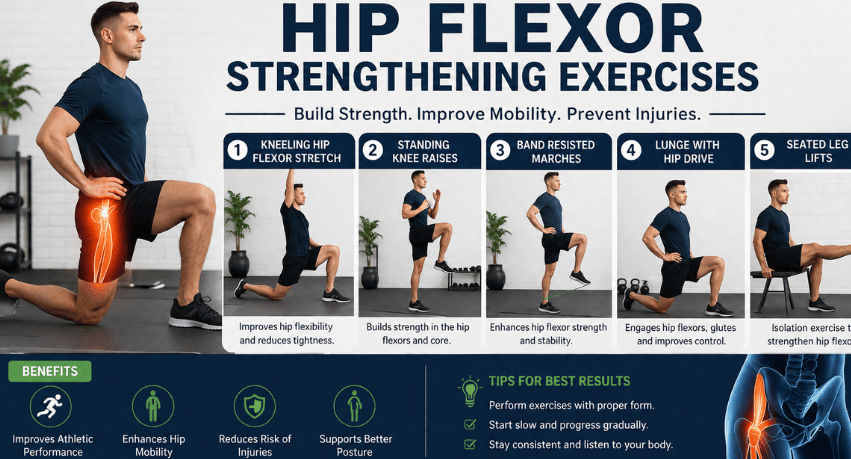
Every step you take, every sprint you make, and every time you bend, climb, or lift relies on the strength and stability of your hip flexors. Yet these essential muscles are often neglected until stiffness, reduced mobility, or persistent lower back pain begins to affect daily life or athletic performance.
That’s where hip flexor strengthening exercises become essential. By targeting one of the body’s most important muscle groups, these exercises can improve posture, enhance flexibility, increase lower-body power, and reduce the risk of common injuries.
| Hip flexor strengthening exercises | Overview |
| Purpose | Strengthen the hip flexor muscles to improve mobility, stability, posture, and athletic performance. |
| Primary Muscles Targeted | Iliopsoas (Psoas Major & Iliacus), Rectus Femoris, Sartorius, Tensor Fasciae Latae (TFL), and Pectineus. |
| Key Benefits | Better hip mobility, improved posture, enhanced balance, increased lower-body power, reduced injury risk, and lower back support. |
| Best Exercises | Standing Knee Raises, Seated Marches, Hanging Leg Raises, Resistance Band Hip Flexion, Mountain Climbers, Straight Leg Raises, High Knees, and Step-Ups. |
| Who Can Benefit | Athletes, runners, cyclists, office workers, older adults, fitness beginners, and individuals recovering from inactivity. |
| Workout Frequency | Perform 2–4 sessions per week with adequate rest and progressive overload. |
| Warm-Up | Hip circles, walking lunges, leg swings, high knees, bodyweight squats, and dynamic stretches. |
| Post-Workout Stretching | Kneeling Hip Flexor Stretch, Butterfly Stretch, Figure-Four Stretch, and Child’s Pose. |
| Nutrition Tips | Eat lean protein, whole grains, healthy fats, fruits, and vegetables, and stay well hydrated for muscle recovery. |
| Common Mistakes | Skipping warm-ups, using momentum, poor posture, overtraining, holding your breath, and ignoring glute/core strengthening. |
| Expected Results | Stronger hips, improved flexibility, better movement mechanics, enhanced sports performance, and reduced risk of hip, knee, and lower back injuries. |
What Are The Hip Flexor Strengthening Exercises?
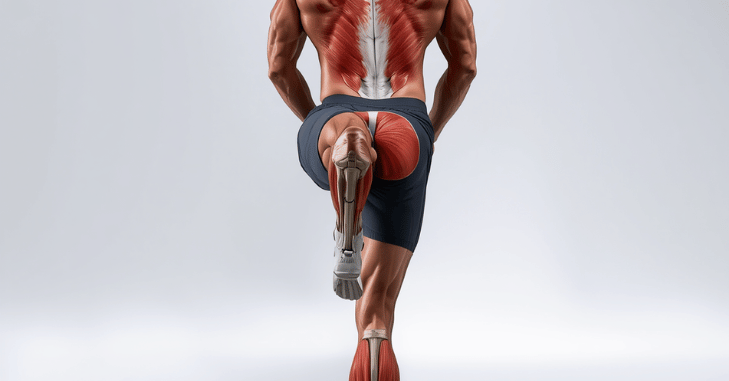
Hip flexor strengthening exercises are targeted movements designed to build strength, stability, and endurance in the muscles located at the front of the hips. These muscles are responsible for lifting your knees, bending at the waist, stabilizing the pelvis, and supporting smooth movement during everyday activities such as walking, running, climbing stairs, cycling, and jumping.
The primary hip flexor muscles include the iliopsoas (psoas major and iliacus), rectus femoris, sartorius, tensor fasciae latae (TFL), and pectineus. Together, they work with the core, glutes, hamstrings, and quadriceps to maintain proper posture, balance, and efficient movement. Performing hip flexor strengthening exercises regularly helps improve muscle function, enhance mobility, reduce the risk of injury, and support better athletic and everyday performance.
Why Hip Flexor Strength Matters
Strong hip flexors contribute to better movement mechanics and reduce stress on surrounding joints and muscles.
Benefits of Strong Hip Flexors
- Improved posture
- Better balance and stability
- Enhanced running and sprinting performance
- Increased kicking and jumping power
- Reduced lower back pain
- Better hip mobility
- Lower injury risk
- Improved athletic performance
- Easier everyday movement
Signs Your Hip Flexors Need Strengthening
Weak or tight hip flexors can affect your mobility, posture, and overall movement, often developing gradually over time. You may notice difficulty lifting your knees, tightness in the hips after prolonged sitting, lower back discomfort, poor posture, or hip pain during exercise.
Other common signs include a shortened walking or running stride, difficulty climbing stairs, and weakness during movements such as squats or lunges. If these symptoms occur regularly, strengthening your hip flexors can help improve flexibility, stability, and overall functional movement.
Benefits
Strengthening your hip flexors offers numerous advantages for mobility, athletic performance, and overall lower-body health.
Improved Mobility
- Increases hip range of motion
- Improves flexibility and movement efficiency
- Makes everyday activities like walking, climbing stairs, and bending easier
- Reduces stiffness caused by prolonged sitting
Better Athletic Performance
Strong hip flexors are essential for explosive movements in many sports and physical activities.
Key benefits include
Faster sprinting speed
- Higher vertical jumps
- More powerful kicks
- Improved cycling efficiency
- Better agility and acceleration
- Enhanced balance and coordination
Injury Prevention
Strong hip flexors help stabilize the pelvis and reduce excessive stress on surrounding joints and muscles.
They may help lower the risk of
- Hip strains
- Groin injuries
- Lower back pain
- Knee instability
- Muscle imbalances
- Overuse injuries during sports and exercise
Best Hip Flexor Strengthening Exercises

Standing Knee Raises
Standing knee raises are one of the simplest and most effective exercises for strengthening the hip flexors, making them ideal for beginners. To perform this exercise, stand tall with your feet shoulder-width apart, lift one knee toward your chest, pause briefly at the top, and then lower it slowly before alternating to the other leg.
Seated Marches
Seated marches are an excellent low-impact exercise, especially for beginners, seniors, or office workers who spend long hours sitting. Sit upright in a sturdy chair, lift one knee as high as comfortably possible, lower it with control, and repeat with the opposite leg.
Hanging Leg Raises
Hanging leg raises are a more advanced exercise that effectively targets the hip flexors and strengthens the core. Hang from a pull-up bar with your legs straight, raise them until they are parallel to the floor, and slowly lower them back to the starting position. This exercise develops powerful hip flexors, improves core stability, and enhances grip strength.
Resistance Band Hip Flexion
Using a resistance band adds progressive resistance, making hip flexor training more challenging and effective. Secure one end of the resistance band and attach the other around your ankle. Lift your knee against the band’s resistance, then slowly return to the starting position.
Mountain Climbers
Mountain climbers combine strength training with cardiovascular exercise, making them ideal for improving both fitness and hip flexor power. Start in a high plank position, drive one knee toward your chest, quickly alternate legs, and maintain a stable core throughout the movement
Straight Leg Raises
Straight leg raises are a simple yet highly effective exercise for strengthening the hip flexors. Lie on your back with one knee bent and the opposite leg straight. Raise the straight leg slowly until it reaches about a 45-degree angle, then lower it back down with control.
High Knees
High knees are an excellent dynamic exercise that develops explosive lower-body strength and cardiovascular fitness. Stand upright and jog in place while lifting your knees to hip height and swing your arms naturally. Regularly performing high knees helps build explosive power, improve endurance, and increase coordination.
Sample Hip Flexor Workout
| Exercise | Sets | Repetitions |
| Standing Knee Raises | 3 | 15 each leg |
| Resistance Band Hip Flexion | 3 | 12 each leg |
| Step-Ups | 3 | 12 each leg |
| Straight Leg Raises | 3 | 15 each leg |
| Mountain Climbers | 3 | 30 seconds |
| Hanging Leg Raises | 3 | 10 |
Warm-Up Before Strength Training

Preparing your muscles reduces injury risk and improves performance.
Effective Warm-Up Exercises
- Hip circles
- Walking lunges
- Leg swings
- High knees
- Bodyweight squats
- Dynamic stretches
Stretching After Your Workout
Stretching after your workout is an important part of any routine that includes hip flexor strengthening exercises, as it helps improve flexibility, reduce muscle tightness, and promote faster recovery. Incorporating stretches such as the kneeling hip flexor stretch, holding it for about 30 seconds on each side, helps lengthen the hip flexor muscles and increase mobility.
The butterfly stretch improves hip flexibility, while the figure-four stretch targets the hips and glutes to relieve tension. Finishing with Child’s Pose helps relax the lower back and hips, making it an excellent way to complement hip flexor strengthening exercises and support long-term mobility and injury prevention.
Common Mistakes to Avoid
- Using momentum instead of muscle control
- Skipping warm-ups
- Ignoring proper posture
- Training only the hip flexors while neglecting the glutes and core
- Progressing too quickly
- Holding your breath
- Using excessive weight
- Exercising through pain
Nutrition for Muscle Strength and Recovery

Proper nutrition is just as important as hip flexor strengthening exercises for building stronger muscles and supporting recovery. A balanced diet rich in lean protein, fruits and vegetables, whole grains, and healthy fats provides the nutrients your body needs to repair muscle tissue and maintain energy levels.
Staying adequately hydrated and including foods high in magnesium and potassium can further support muscle function, reduce cramping, and improve recovery. Combining good nutrition with regular hip flexor strengthening exercises helps maximize muscle growth, enhance performance, and promote long-term mobility and overall health.
Who Should Perform Hip Flexor Strengthening Exercises?
- Runners
- Cyclists
- Soccer players
- Basketball players
- Tennis players
- Weightlifters
- Office workers
- Older adults
- Individuals recovering from inactivity
- Fitness beginners
Recovery Tips

- Sleep 7–9 hours per night
- Stay hydrated
- Stretch regularly
- Avoid overtraining
- Include rest days
- Use foam rolling when needed
- Gradually increase workout intensity
Conclusion
Hip flexor strengthening exercises are one of the most effective ways to improve lower-body strength, enhance mobility, and support long-term joint health. By consistently incorporating these exercises into your fitness routine, you can build stronger hips, improve posture, reduce the risk of injuries, and boost performance in activities such as running, cycling, weight training, and everyday movement.
Pairing hip flexor strengthening exercises with proper warm-ups, stretching, balanced nutrition, and adequate recovery will maximize your results and help keep your muscles healthy and resilient. Whether you’re an athlete striving for peak performance, recovering from inactivity, or simply looking to move more comfortably, making hip flexor strengthening exercises a regular part of your workout routine is a smart investment in your overall strength, flexibility, and long-term physical well-being.
Want to know about Carotid Massage: The Complete Guide to Benefits, Risks, Safety, SVT Relief, and When to Avoid It Check out our Fitness category.
FAQs
Two Steps to Increased Hip Flexor Mobility, Strength, and Function. Use low-impact, controlled exercises like banded marches, straight-leg lifts, and Psoas holds to strengthen weak hip flexors.
Use the RICE approach for the first 48 hours to minimize inflammation and hasten hip flexor rehabilitation.
Walking regularly is a great strategy to reduce hip pain.
The hip flexor muscles can be directly targeted by massage treatments, which can reduce tension, increase flexibility, and encourage relaxation.