
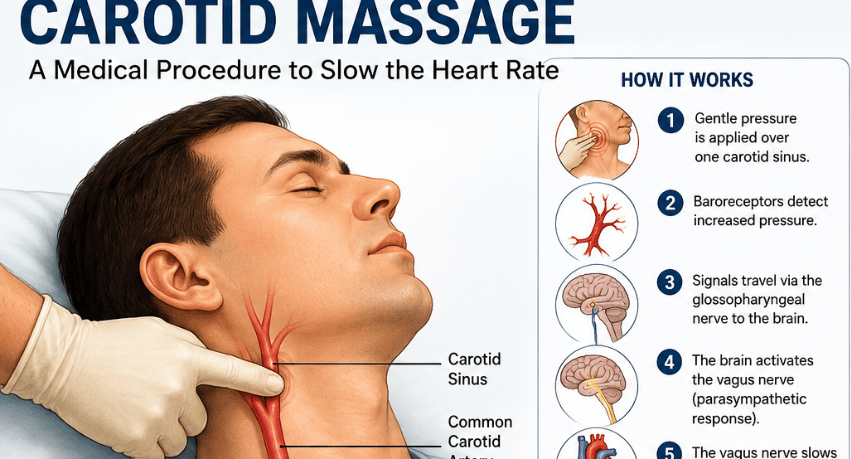
Carotid sinus massage (CSM) is a specialized medical technique used to temporarily slow the heart rate by stimulating pressure-sensitive receptors in the carotid sinus, located on either side of the neck. Although the procedure takes only a few seconds, it plays an important role in diagnosing certain heart conditions and treating specific types of supraventricular tachycardia (SVT).
By activating the body’s natural baroreceptor reflex, carotid massage can help restore a normal heart rhythm and provide valuable diagnostic information for patients with unexplained fainting or suspected carotid sinus hypersensitivity. Despite its clinical benefits, carotid massage is not a routine neck massage or a home remedy.
Trained healthcare professionals must perform it because improper technique or use in high-risk patients can lead to serious complications, including stroke, severe slowing of the heart rate, or dangerous drops in blood pressure.
| Topic | Key Information |
| What Is Carotid Massage? | A medical procedure that gently massages one carotid sinus to stimulate the vagus nerve and slow the heart rate. |
| Primary Purpose | Diagnose carotid sinus syndrome and treat certain types of supraventricular tachycardia (SVT). |
| How It Works | Stimulates carotid sinus baroreceptors, activating the vagus nerve, slowing AV node conduction, heart rate, and blood pressure. |
| Medical Uses | SVT treatment, diagnosis of carotid sinus hypersensitivity, evaluation of unexplained fainting (syncope), and autonomic nervous system testing. |
| Main Benefits | Non-invasive, rapid results may restore normal heart rhythm, help diagnose certain heart conditions, and may reduce the need for medications. |
| Who Performs It? | Only trained healthcare professionals under ECG and blood pressure monitoring are allowed. |
| Procedure Time | Massage is usually performed for 5–10 seconds on one side of the neck. |
| Safety Precautions | Check for carotid bruits, review stroke history, monitor ECG and blood pressure, and never massage both sides at the same time. |
| Possible Risks | Stroke, transient ischemic attack (TIA), severe bradycardia, temporary asystole, and low blood pressure. |
| Common Side Effects | Mild dizziness, lightheadedness, flushing, blurred vision, and temporary neck discomfort. |
| Absolute Contraindications | Recent stroke or TIA, significant carotid artery blockage, carotid bruit, unstable recent heart attack, or active neurological symptoms. |
| Relative Contraindications | Severe coronary artery disease, uncontrolled hypertension, significant arrhythmias, peripheral artery disease, and carotid plaque. |
| Who Is at Higher Risk? | Adults over 65, smokers, and people with diabetes, high blood pressure, high cholesterol, carotid artery disease, or previous stroke/TIA. |
| Home Use | Carotid massage should never be performed without medical supervision. |
| Effectiveness for SVT | Often effective for AV node-dependent SVT but not all abnormal heart rhythms. |
| Recovery | Most patients recover quickly with brief monitoring of heart rhythm and blood pressure. |
| Pros | Quick, inexpensive, non-invasive, effective for selected SVT cases, and a valuable diagnostic tool. |
| Cons | Risk of stroke requires trained professionals, is not suitable for everyone, and may cause severe bradycardia. |
What Is Carotid Massage?
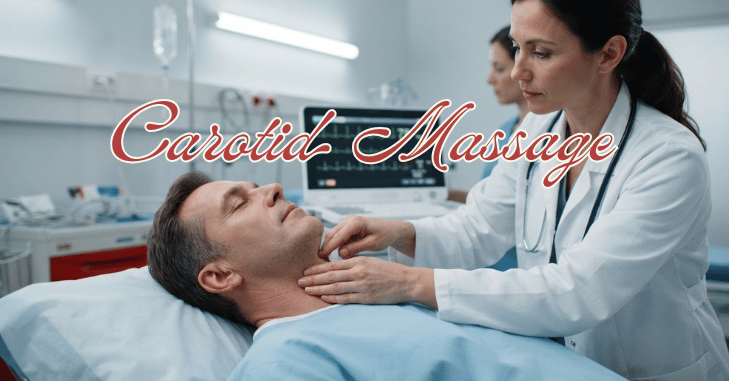
Carotid massage is a medical procedure that involves applying gentle pressure over one carotid sinus located just below the angle of the jaw. The carotid sinus contains specialized pressure sensors called baroreceptors, which constantly monitor blood pressure. When these receptors are stimulated, they signal the brain to activate the vagus nerve, slowing the heart rate and lowering blood pressure.
- Slow a rapid heart rhythm
- Diagnose carotid sinus syndrome
- Evaluate unexplained fainting (syncope)
- Assess autonomic nervous system function
Although it takes only a few seconds to perform, the procedure requires proper patient selection and continuous monitoring.
Understanding the Carotid Sinus
The carotid sinus is a widened portion of the internal carotid artery located near where the common carotid artery divides.
Its primary role is regulating blood pressure.
When blood pressure rises:
- Baroreceptors detect the increased pressure.
- Signals travel to the brainstem.
- The brain increases vagal activity.
- Heart rate slows.
- Blood vessels relax.
- Blood pressure decreases.
How Does Carotid Massage Work?
Step-by-Step Process
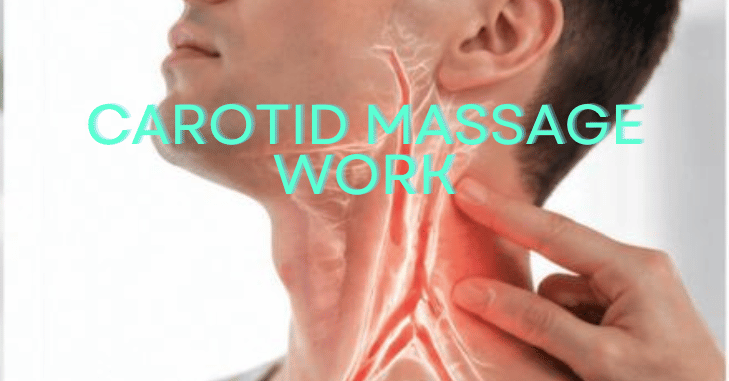
- Gentle pressure is applied over one carotid sinus.
- Baroreceptors sense increased pressure.
- Signals travel through the glossopharyngeal nerve.
- The brain activates the parasympathetic nervous system.
- The vagus nerve slows electrical conduction through the AV node.
- Heart rate decreases.
This slowing of AV node conduction can interrupt certain abnormal heart rhythms, especially AV node-dependent supraventricular tachycardia.
Medical Uses of Carotid Massage
1. Treatment of Supraventricular Tachycardia (SVT)
- Sudden rapid heartbeat
- Palpitations
- Chest discomfort
- Dizziness
- Mild shortness of breath
If successful, normal rhythm returns within seconds.
2. Diagnosis of Carotid Sinus Hypersensitivity
Some individuals have an exaggerated response to pressure on the carotid sinus.
Even minor stimulation such as the following:
- Tight collars
- Shaving
- Turning the neck
- Wearing neckties
3. Evaluation of Unexplained Syncope
Doctors sometimes perform carotid massage in older adults with recurrent unexplained fainting episodes. If symptoms are reproduced alongside significant slowing of the heart rate or a drop in blood pressure, carotid sinus syndrome becomes more likely.
Benefits of Carotid Massage
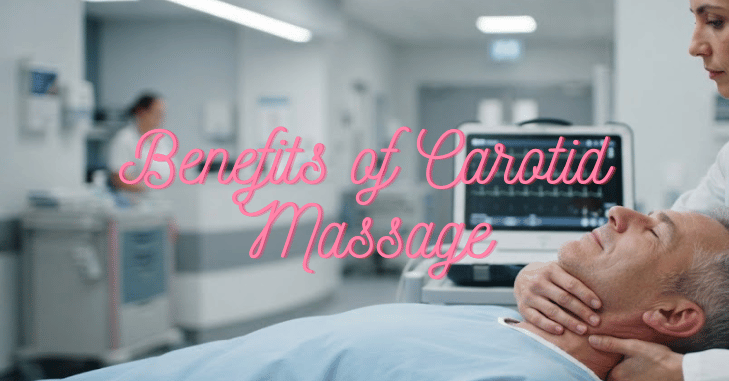
When performed by a qualified healthcare professional in an appropriate medical setting, carotid offers several important clinical benefits. Its primary advantage is the ability to slow the heart rate naturally by stimulating the vagus nerve, making it a useful first-line maneuver for certain types of supraventricular tachycardia (SVT).
In some patients, it can restore a normal heart rhythm within seconds, reducing the need for medications or more invasive treatments. Carotid is also a valuable diagnostic tool for identifying carotid sinus hypersensitivity and evaluating unexplained fainting (syncope), particularly in older adults.
Step-by-Step Medical Procedure
The procedure typically follows these steps:
- Obtain informed consent.
- Position the patient lying flat.
- Attach ECG monitoring.
- Monitor blood pressure.
- Locate one carotid sinus.
Safety Precautions
Several precautions reduce the risk of complications.
Healthcare providers should:
- Listen for carotid bruits.
- Review stroke history.
- Assess cardiovascular risk.
- Use continuous ECG monitoring.
Risks of Carotid Massage
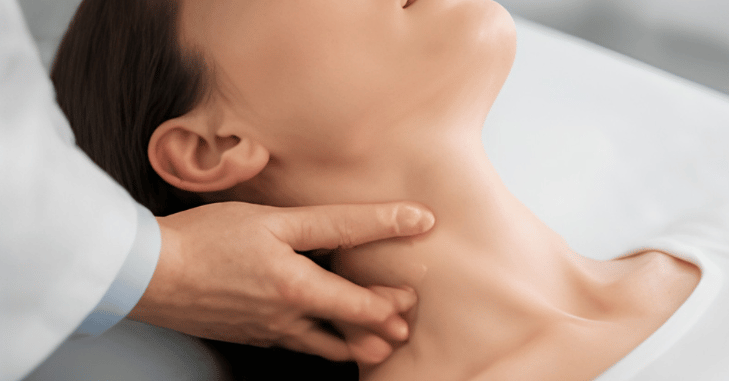
Stroke
- Dislodging plaque from diseased carotid arteries can block blood flow to the brain.
Transient Ischemic Attack (TIA)
- Temporary neurological symptoms may occur.
Severe Bradycardia
- Excessive slowing of the heart may reduce blood flow to vital organs.
Temporary Asystole
- Rarely, the heart may pause briefly.
Side Effects
Most side effects are temporary.
Patients may experience:
- Lightheadedness
- Mild dizziness
- Temporary flushing
When Should Carotid Massage Be Avoided?
Absolute Contraindications
Carotid massage should never be performed in patients with certain conditions because the risk of serious complications outweighs any potential benefit. Absolute contraindications include a recent stroke or transient ischemic attack (TIA) or known significant carotid artery stenosis or blockage.
Relative Contraindications
Massage may still be considered in some patients, but it should be performed with extra caution after a careful medical assessment. Relative contraindications include severe coronary artery disease, uncontrolled high blood pressure, significant heart rhythm disorders, advanced peripheral artery disease, and known carotid artery plaque.
Who Is at Higher Risk?
Certain individuals have a greater risk of experiencing complications from carotid massage or are more likely to have conditions that make the procedure unsafe. This includes older adults, particularly those over the age of 65, as well as people with carotid artery disease, a history of stroke or transient ischemic attack (TIA), high blood pressure, diabetes, high cholesterol, coronary artery disease, or peripheral artery disease.
Can You Perform Carotid Massage at Home?
Improper technique may
- Cause stroke
- Trigger dangerous arrhythmias
- Produce severe low blood pressure
- Lead to loss of consciousness
Effectiveness for SV
Studies have shown that carotid massage can successfully terminate certain SVT episodes, particularly those dependent on the AV node. However, success rates vary depending on the type of arrhythmia and the patient’s condition. If carotid is ineffective, healthcare providers may use other vagal maneuvers, medications such as adenosine, or electrical cardioversion in emergencies.
What Happens During Recovery?
Most patients recover immediately after the procedure.
Healthcare providers generally:
- Continue ECG monitoring briefly
- Recheck blood pressure
- Assess for dizziness or neurological symptoms
- Observe before discharge if performed in an emergency setting
Most individuals resume normal activities unless additional treatment is needed.
Pros and Cons
| Pros | Cons |
|---|---|
| Non-invasive | Risk of stroke in susceptible patients |
| Rapid effect | Requires trained personnel |
| Useful diagnostic test | Not suitable for everyone |
| Can terminate some SVT episodes | May cause severe bradycardia |
| Inexpensive | Needs ECG monitoring |
When to Seek Medical Care?
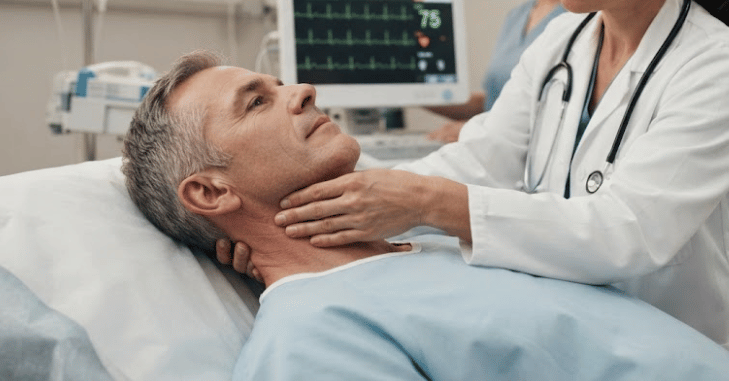
Seek immediate medical attention if you experience a sudden rapid heartbeat that lasts several minutes, especially if it is accompanied by symptoms such as chest pain, difficulty breathing, fainting, severe dizziness, weakness on one side of the body, or trouble speaking.
These signs may indicate a serious heart rhythm disorder, a heart attack, or a stroke that requires urgent evaluation and treatment. Do not attempt carotid massage on yourself if you have these symptoms, as improper use can be dangerous.
Conclusion
Carotid massage remains an important, evidence-based procedure in cardiovascular medicine, particularly for diagnosing carotid sinus hypersensitivity and managing selected cases of supraventricular tachycardia (SVT). When performed by experienced healthcare professionals under proper monitoring.
It can safely slow the heart rate, restore normal rhythm in some patients, and provide valuable diagnostic information without the need for invasive procedures. However, because the technique carries potential risks—including stroke, severe bradycardia, and low blood pressure—it should only be performed after careful patient evaluation and should never be attempted at home.
Apart from that, if you want to know more about How to Get Rid of Back Fat: Complete Step-by-Step Guide to a Stronger, Leaner, More Toned Back Through Exercise, Nutrition then visit our Fitness category.
Frequently Asked Questions (FAQs)
When performed correctly, it usually causes only mild pressure or slight discomfort.
It can terminate certain AV node-dependent supraventricular tachycardias by slowing electrical conduction through the heart. However, it is not effective for all abnormal heart rhythms.
The massage itself typically lasts 5 to 10 seconds on one side of the neck, although preparation and monitoring take longer.
Yes, although the risk is low in carefully selected patients. Individuals with carotid artery disease or plaque are at higher risk, which is why the procedure is performed only after appropriate evaluation.
Massaging both carotid sinuses simultaneously can excessively reduce blood flow to the brain and dramatically slow the heart rate, increasing the risk of serious complications.